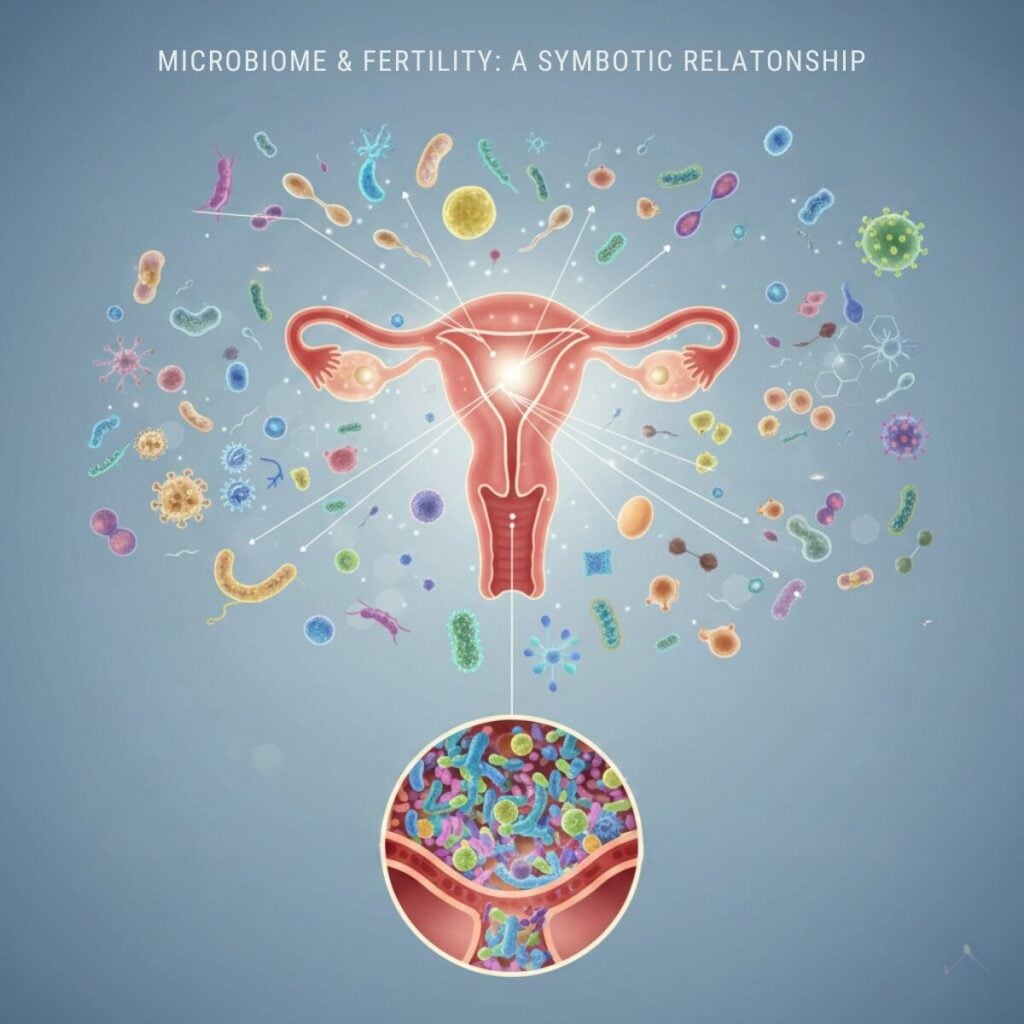
The human body is host to numerous microbial communities, and the microbiome refers to the collective genetic material of these microorganisms. While the gut microbiome has received a lot of attention in recent years, there’s another microbiome that matters enormously for women trying to conceive: the vaginal microbiome. Just as gut health influences digestion and immunity, the vaginal microbiome plays a direct role in whether the reproductive environment supports conception, implantation, and a healthy pregnancy. Let’s explore how the vaginal microbiome shapes fertility, what testing can reveal, and how to support a fertility-friendly microbial balance.
What is the vaginal microbiome, and why does it matter for conception?
The vaginal microbiome refers to the ecology of microorganisms that reside in the vagina — a diverse community of bacteria, fungi, viruses, and other microbes. Its composition varies from woman to woman, but in a fertility-supportive vaginal microbiome, the dominant organisms are typically Lactobacillus species, particularly Lactobacillus crispatus, Lactobacillus iners, Lactobacillus gasseri, and Lactobacillus jensenii.
These bacteria produce lactic acid, which keeps the vagina at an acidic pH (roughly 3.5 to 4.5). That acidity isn’t just about preventing infection — it directly shapes the environment sperm must travel through on their way to the egg. When Lactobacilli dominate, the vagina becomes inhospitable to harmful bacteria, yeast, and other pathogens, and more hospitable to a successful conception.
How vaginal dysbiosis undermines fertility
A balanced, Lactobacillus-dominant vaginal microbiome helps maintain the acidic environment that supports sperm survival and motility, increasing the chances of successful fertilization. When that balance shifts — a state called vaginal dysbiosis — fertility can suffer.
Dysbiosis occurs when “bad” bacteria overtake the Lactobacilli, disrupting the vagina’s natural pH and often triggering inflammation, recurrent infections, or subtler shifts that never produce obvious symptoms but still interfere with conception. Common triggers include antibiotic use, hormonal changes, sexual activity, douching, and certain underlying health conditions. As Lactobacillus populations decline, opportunistic organisms like Gardnerella vaginalis, Atopobium vaginae, or Prevotella species can take over, raising the risk of bacterial vaginosis (BV) and urinary tract infections (UTIs) — both of which have been linked to reduced fertility and pregnancy complications.
Four ways the vaginal microbiome shapes your fertility journey
1. Cervical mucus quality. Cervical mucus changes throughout your cycle, and during the fertile window it becomes thinner, clearer, and stretchier — ideal for sperm survival and transport. Certain Lactobacillus species help maintain this mucus quality, effectively creating a “runway” that helps sperm reach the egg. A disrupted microbiome can compromise this process, even when timing and ovulation are otherwise normal.
2. Implantation success. Conception doesn’t end at fertilization — the embryo still has to implant into the uterine lining. The vaginal microbiome can influence the endometrial environment by modulating immune responses and receptivity. A drop in Lactobacillus species has been associated with reduced implantation success, making this one of the more overlooked pieces of the fertility puzzle.
3. Infection and inflammation risk. Dysbiosis raises the risk of BV and other infections, which in turn can cause inflammation in the reproductive tract. That inflammation can interfere with the normal functioning of the fallopian tubes, ovaries, or uterus — any of which can become a barrier to conception if compromised.
4. Outcomes with IVF and IUI. For women pursuing assisted reproductive technologies, the vaginal microbiome may directly affect success rates. Research has linked an imbalanced vaginal microbiome to lower implantation and pregnancy rates in women undergoing IVF or IUI. This makes optimizing the microbiome before and during treatment a meaningful, and often underdiscussed, part of fertility preparation.
Should you get your vaginal microbiome tested?
If you’re actively trying to conceive — especially if you’re facing unexplained infertility, recurrent pregnancy loss, or preparing for IVF/IUI — testing the vaginal microbiome can offer real insight. By analyzing which bacteria dominate, a healthcare provider can identify imbalances and tailor treatment before or alongside fertility treatment, rather than leaving this variable unaddressed.
If you’re experiencing abnormal discharge, itching, or discomfort alongside fertility challenges, it’s worth raising with your provider. These symptoms are often dismissed as unrelated to conception, but they can be a meaningful clue.
Treating dysbiosis to support fertility
Treatment focuses on restoring a Lactobacillus-dominant balance. Targeted probiotics can help replenish beneficial bacteria and reestablish the acidic environment that supports both sperm survival and implantation. Lifestyle factors — a balanced diet and stress reduction — also play a supporting role, since both diet and stress hormones can influence microbial balance.
In some cases, antibiotics are necessary to clear an active infection contributing to dysbiosis. But antibiotics should be used judiciously and followed by microbiome-supportive care, since overuse can further disrupt both the vaginal and gut microbiomes — potentially working against the very fertility goals you’re trying to support.
Fertility-focused tips for a healthier vaginal microbiome
- Practice gentle hygiene. Clean the external genital area with warm water and a mild, fragrance-free soap. Avoid douches or scented products, which strip away the protective acidic environment sperm and embryos depend on.
- Don’t overwash. Excessive washing or harsh cleansers can strip the natural protective barrier your microbiome needs to stay balanced during your fertile window and beyond.
- Choose cotton underwear. Breathable fabric reduces trapped heat and moisture, which otherwise encourage the kind of bacterial overgrowth that can undermine a fertility-supportive environment.
- Be selective with lubricants and condoms during your fertile window. Many lubricants and condoms contain additives, fragrances, or spermicides that can disrupt the vaginal microbiome — and some can also interfere with sperm motility. Opt for water-based, fragrance-free, fertility-friendly lubricants, and non-latex condoms if you have sensitivities. Good Clean Love and Ah Yes are both brands we like.
- Consider a targeted probiotic. Look for strains studied for vaginal and fertility support, such as Lactobacillus rhamnosus, Lactobacillus crispatus, or Lactobacillus reuteri. Talk with a healthcare professional before starting any new supplement, especially while trying to conceive.
- Eat with your microbiome in mind. A diet rich in fruits, vegetables, whole grains, and lean protein — and lower in processed sugar — supports microbial balance throughout the body, including the reproductive tract.
- Manage stress. Chronic stress affects immune function and hormonal balance, both of which influence the vaginal microbiome and, in turn, fertility. Regular movement, meditation, yoga, or other stress-reducing practices can help.
- Practice safe sex outside your conception window. Consistent barrier method use when you’re not actively trying to conceive helps prevent STIs that could otherwise disrupt your microbiome and complicate future fertility efforts.
The bottom line
Research connecting the vaginal microbiome to fertility outcomes is still evolving, and every woman’s microbiome is unique — what supports one person’s fertility may look different for another. But the evidence so far makes clear that this often-overlooked factor deserves a seat at the table alongside ovulation tracking, hormone testing, and other standard fertility workups. If you’re trying to conceive and have concerns about your vaginal health, don’t stay quiet about it — talk with a healthcare professional who can evaluate your microbiome as part of your fertility picture.