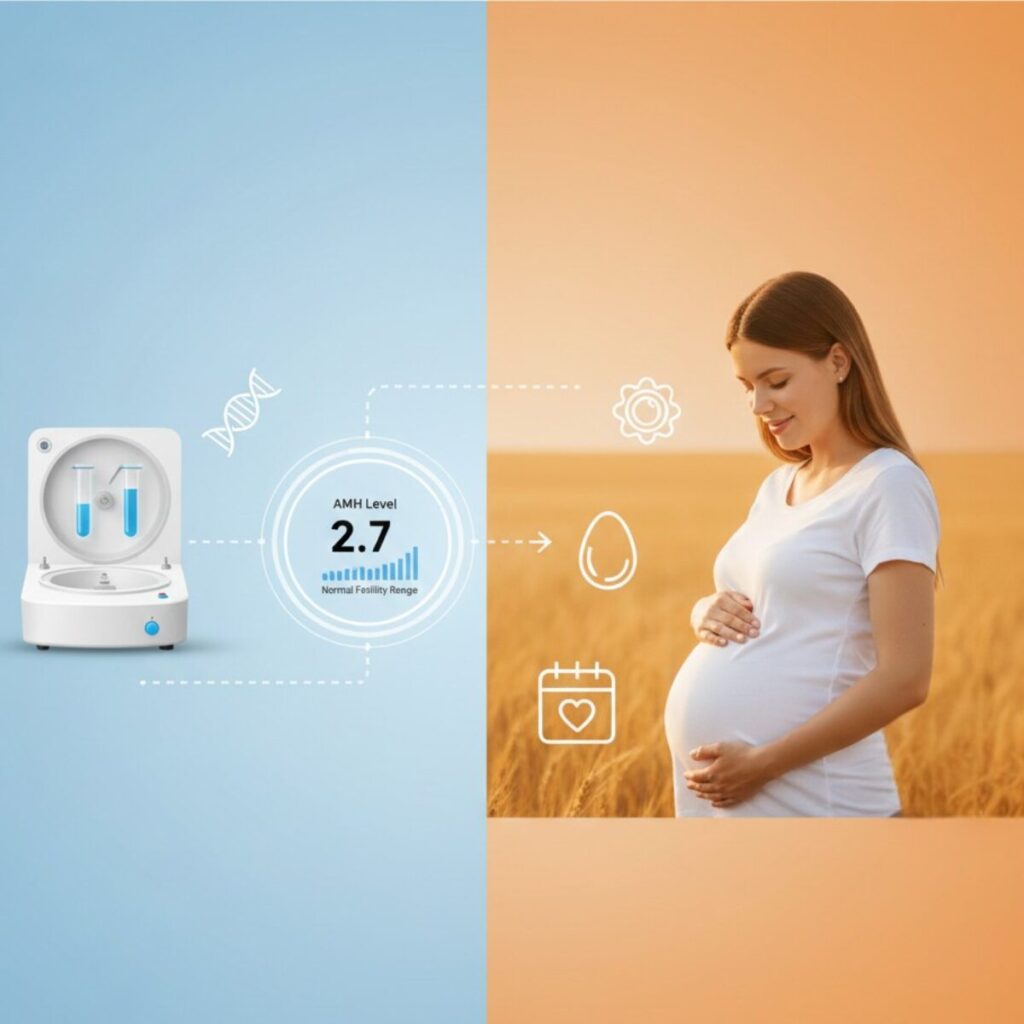
Anti‑Müllerian Hormone (AMH) is a blood test that measures a hormone produced by ovarian follicles. Doctors often use it when evaluating fertility — especially for those actively trying to conceive, considering egg freezing, or preparing for IVF — but it’s important to understand both what it can tell us and what it cannot reliably predict.
Pros: What AMH Is Useful For
1. Estimates Ovarian Reserve
AMH levels reflect the number of small follicles in the ovaries, which gives an idea of how many eggs might be left. Higher AMH generally means more eggs, while lower AMH suggests fewer eggs in the “reserve.” This is often the starting point for anyone beginning a fertility workup. MedlinePlus
2. Helpful in IVF and Fertility Treatment Planning
In assisted reproductive technologies like IVF:
- AMH helps doctors predict how the ovaries will respond to stimulation drugs.
- This can guide medication dosing, lowering the risk of complications like ovarian hyperstimulation syndrome (OHSS) and improving treatment planning. PubMed+1
3. A Key Data Point for Egg Freezing Decisions
For those weighing whether and when to freeze eggs, AMH is typically one of the first tests ordered. It helps estimate how many eggs a stimulation cycle might retrieve, which shapes decisions around timing, number of cycles, and whether to move forward now or wait.
4. Can Support a PCOS Evaluation
Because polycystic ovary syndrome (PCOS) involves an excess of small antral follicles, AMH levels often run higher than expected for age. This makes it a useful supporting clue for fertility patients with irregular cycles who don’t yet have a diagnosis.
5. Stable Across the Menstrual Cycle
Unlike some hormone tests, AMH levels don’t vary much from day to day in the menstrual cycle, making the test simpler to schedule — a practical advantage for anyone juggling fertility appointments. PubMed
Cons: What AMH Can Not Tell You
1. Not a Fertility “Prediction” Test
Many people think AMH can tell them whether they can get pregnant—but it cannot reliably predict natural fertility or the chance of conceiving. Large studies show AMH has poor predictive value for pregnancy occurring naturally. A low AMH in someone who hasn’t yet tried to conceive does not, by itself, mean infertility. PubMed
2. Does Not Measure Egg Quality
AMH tells you about quantity (how many eggs might be left) but not egg quality, which is critical for successful pregnancy and often declines with age. Two people with the same AMH level can have very different real-world fertility if their ages differ. MedlinePlus
3. No Standardized Test Worldwide
Different labs use different assay methods, and there is no universal standard for AMH measurement. This can make test results difficult to compare between clinics or over time — worth flagging with your provider if you’re tracking AMH across a fertility journey. PMC
4. Limited Use Outside Infertility Care
Professional guidelines discourage using AMH as a routine fertility screening test in women who aren’t experiencing infertility, because it doesn’t predict time to pregnancy and can lead to unnecessary worry or false reassurance. ACOG
5. Not a Menopause Predictor
AMH declines with age, but it cannot accurately predict when menopause will occur for an individual. ACOG
6. Never the Whole Fertility Picture
AMH is only one piece of a fertility evaluation. It doesn’t account for cycle regularity, tubal or uterine factors, or male-factor fertility — which is involved in roughly half of infertility cases. A full workup, not a single hormone level, is what actually guides a fertility diagnosis.
When to Bring AMH Into the Fertility Conversation
If you’re actively trying to conceive, general guidance is to seek a fertility evaluation after one year of trying (under age 35), six months (ages 35–40), or right away (over 40). We at Kiara Health believe you should evaluate your fertility as early as possible. AMH is one of the tools used at that point — alongside antral follicle count, cycle history, and a partner’s semen analysis — not a stand-alone answer.
Key Takeaway
AMH is a helpful tool within reproductive medicine—especially when planning fertility treatments like IVF, egg freezing, and understanding ovarian reserve. But it’s not a standalone fertility test and shouldn’t be used by itself to predict whether someone can get pregnant naturally or when they’ll reach menopause.
In other words:
✅ Good for treatment planning and ovarian reserve insight
❌ Not reliable for fertility prediction or life planning decisions